
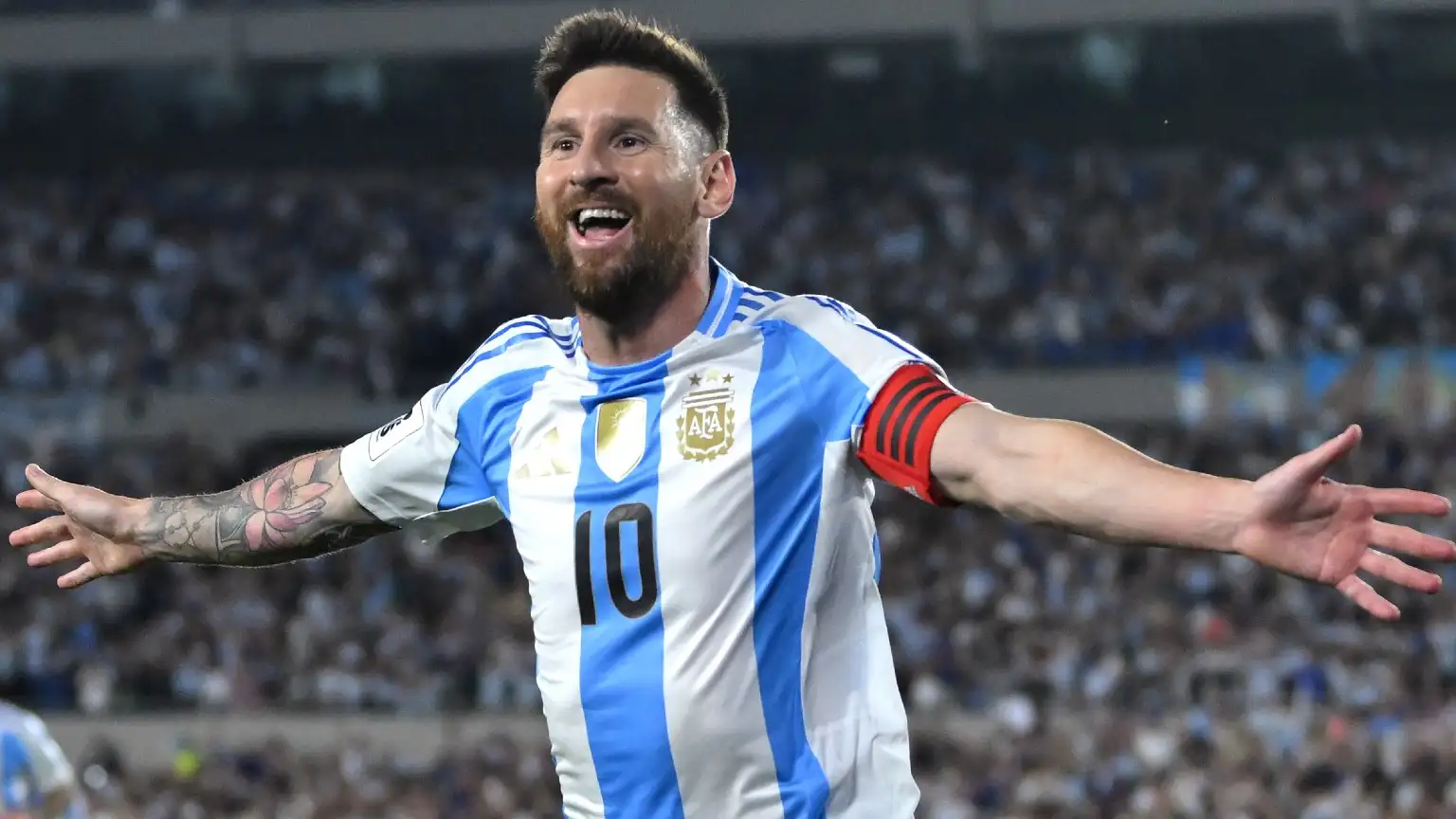
Messi’s Last Dance: Will The GOAT Play His Final World Cup in 2026?
The football world stands at a crossroads. Lionel Messi, the Argentine maestro who has defined an entire generation of the beautiful game, faces perhaps his most personal decision yet. As the 2026 FIFA World Cup approaches, one question echoes across stadiums, social media platforms, and living rooms worldwide: Will we witness Messi’s final chapter on football’s grandest stage?
The Uncertainty That Captivates Millions
Messi himself has remained remarkably tight-lipped about his intentions. At 37 years old currently, he would be approaching his 39th birthday when the tournament kicks off across the United States, Canada, and Mexico. This silence has created a vacuum filled with speculation, hope, and anxiety among fans who desperately want one more glimpse of greatness.
The speculation intensified when FIFA President Gianni Infantino publicly expressed his desire to see both Messi and Cristiano Ronaldo grace the expanded 48-team tournament. These comments weren’t just diplomatic pleasantries. They represented the recognition that these two legends transcend sport itself, becoming cultural icons whose presence elevates any competition to mythical status.
Search engines tell their own story. Tens of thousands of people monthly type variations of the same desperate query into Google: “Will Messi play 2026?”, “Messi retirement plans”, “Argentina World Cup 2026 squad”. This digital footprint reveals something profound about our collective consciousness. We’re not ready to say goodbye.
Why Age Might Just Be a Number
| Factor | Working For Messi | Working Against Messi |
| Physical Condition | Playing in less demanding MLS league | Will be 39 during tournament |
| Mental Drive | Recently won World Cup in Qatar | Achieved career’s ultimate goal |
| Team Role | Can play reduced minutes as playmaker | Argentina building younger squad |
| Legacy | Chance to defend World Cup title | Risk tarnishing perfect 2022 ending |
History offers intriguing precedents. Roger Milla scored at age 42 during the 1994 World Cup. Dino Zoff captained Italy to World Cup glory at 40. These weren’t just participation trophies either. These veterans contributed meaningfully, their experience and football intelligence compensating for declining physical attributes.
Messi’s move to Inter Miami in Major League Soccer might actually work in his favor. The American league, while competitive, doesn’t demand the relentless intensity of European football. He’s controlling his minutes, managing his body intelligently, and still producing moments of magic that remind everyone why he’s considered the greatest of all time.
The Ertugrul Parallel: Warriors Who Never Surrender
There’s something deeply human about refusing to accept the end gracefully. The Turkish historical series Diriliş: Ertuğrul captivated audiences worldwide by showing how legendary warriors continued fighting regardless of age or odds. Ertuğrul Ghazi didn’t retire to a comfortable tent when his beard turned grey. He fought, strategized, and led until his final breath.
This resonates with Messi’s situation in fascinating ways. Ottoman Sultan Mehmed II, known as Mehmed the Conqueror, achieved his greatest triumph by taking Constantinople at age 21, yet he continued expanding his empire for three more decades. His later campaigns lacked the dramatic flair of his early conquest, but they solidified his legacy and demonstrated sustained excellence.
Football fans who grew up watching Turkish historical dramas understand this mentality instinctively. When Ertuğrul Bey faced impossible odds against Mongol armies or Byzantine schemers, he didn’t calculate probabilities. He trusted his skill, his experience, and his unshakeable belief in his mission.
Messi embodies this same warrior spirit. After heartbreaking losses in three consecutive finals between 2014 and 2016, a lesser competitor might have accepted that the World Cup would forever elude him. Instead, Messi persisted through seven more years until Qatar 2022 delivered his destiny.
What Argentina’s Tactical Evolution Means
The Argentine national team isn’t standing still while Messi contemplates his future. Coach Lionel Scaloni has been intelligently integrating younger talent, creating a squad that doesn’t rely exclusively on one man’s genius, regardless of how otherworldly that genius might be.
This evolution presents both opportunity and challenge for Messi. On one hand, Argentina has developed the depth to compete at the highest level without making him run himself into exhaustion. He could play a more measured role, perhaps similar to Andrea Pirlo’s orchestrator position in his later years, dictating tempo rather than sprinting past defenders.
On the other hand, every great athlete must eventually confront the uncomfortable truth that the team might function better without them. This isn’t about talent disappearing overnight. It’s about football being a young person’s game where split-second reactions and recovery time matter enormously.
The Stakes Beyond Personal Glory
| Potential Scenario | Impact on Legacy | Impact on Argentina | Fan Reaction |
| Plays and excels | Cements GOAT status forever | Gives team experience advantage | Pure euphoria |
| Plays but struggles | Slight tarnish on perfect 2022 exit | Might limit younger players | Mixed emotions |
| Doesn’t play | Leaves on ultimate high note | Forces team to evolve faster | Disappointment but understanding |
The 2026 World Cup represents something unprecedented in football history. For the first time ever, a defending champion might return with essentially the same core squad that won the previous tournament. Most World Cup winners see significant turnover in the four-year cycle. Players age out, new talent emerges, and teams rebuild.
Argentina could break this pattern. Di María might be gone, but the spine of that Qatar victory remains viable. Emiliano Martínez in goal will be 33. Cristian Romero at center-back will be 28 and entering his prime. Even Julián Álvarez, the promising striker, will only be 26.
This creates an almost irresistible proposition for Messi. Why not defend the crown? Why not prove that 2022 wasn’t a one-time miracle but rather confirmation of a golden generation capable of sustained dominance?
The Emotional Weight of Decision-Making
Imagine carrying the hopes of an entire nation on your shoulders for nearly two decades. Messi didn’t just play for Argentina. He became Argentina in the eyes of millions. Every loss felt like personal failure. Every victory became national catharsis.
The psychological burden of this responsibility cannot be overstated. When Argentina finally triumphed in Qatar, it felt like liberation for Messi. The monkey was off his back. The unfair comparisons to Diego Maradona could finally cease. He had done it, answered every critic, silenced every doubter.
Now people are asking him to put that weight back on his shoulders. To risk everything one more time. To potentially tarnish the perfect ending with an anticlimactic sequel.
Yet warriors don’t think this way. Ertuğrul Ghazi didn’t conquer territory and then hide in his fortress. He kept expanding, kept fighting, because that was his nature. Perhaps Messi is built the same way. Perhaps retirement sounds appealing in theory but unbearable in practice for someone whose entire identity has been shaped by competition.
What the Numbers Actually Tell Us
Statistical analysis of aging footballers offers mixed messages. While explosive speed typically declines noticeably after 33, technical skills and tactical awareness often improve with experience. Messi never relied primarily on pace anyway. His game has always centered on vision, positioning, and that supernatural ability to find space where none seems to exist.
His recent performances in Major League Soccer demonstrate continued effectiveness. He’s not just scoring goals. He’s creating them through passes that defy conventional geometry. His football IQ remains stratospheric even if his legs can’t carry him on those mesmerizing solo runs quite as often.
The real question isn’t whether Messi can still play at a high level. Clearly he can. The question is whether he can sustain that level through the compressed intensity of a World Cup tournament, where matches come every few days and the margin for error shrinks to nothing.
The Final Verdict Lies With One Man
Ultimately, this decision belongs entirely to Lionel Messi. Not to fans desperate for one more glimpse of magic. Not to FIFA officials hoping to maximize commercial appeal. Not even to Argentina’s coaching staff planning their tactical approach.
If Messi wakes up in 2026 and feels that fire burning in his chest, that insatiable competitive hunger that has driven him since childhood, then he’ll play. If he looks at his family, considers his body, and decides he’s given enough, then he’ll retire with his head held impossibly high.
Either choice deserves respect. The GOAT has earned the right to write his own ending, whatever that ending might be.